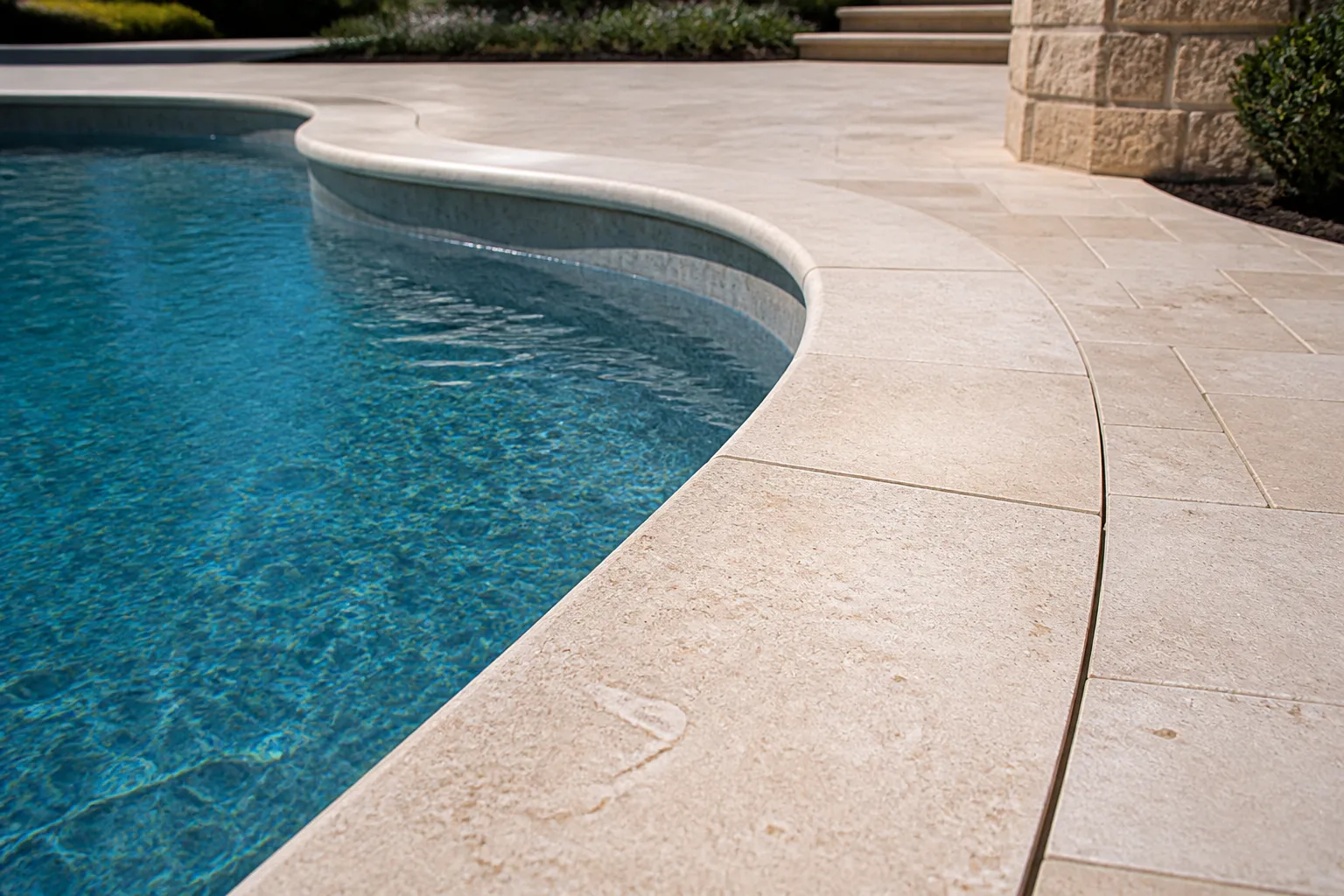
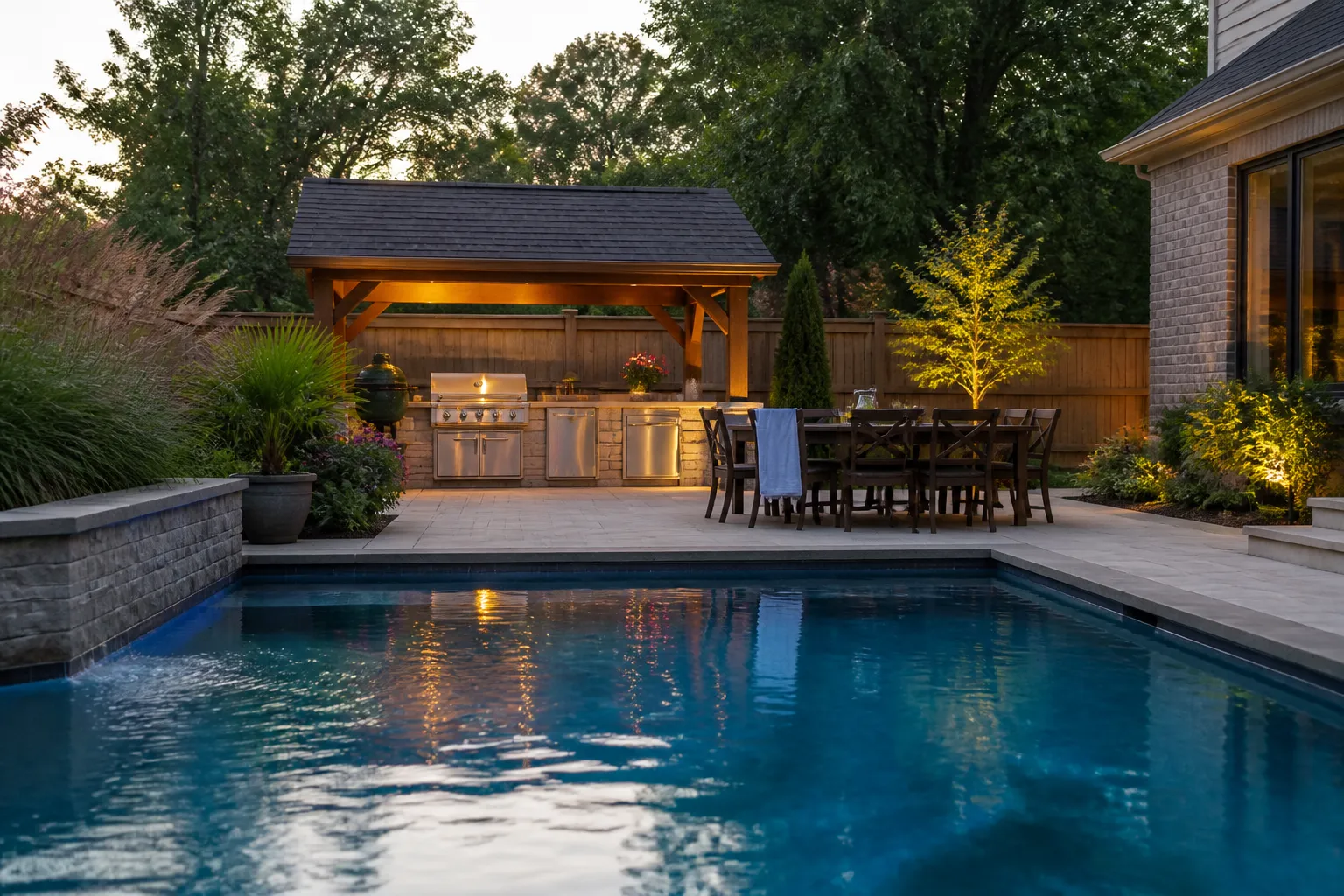
Pool coping is the finished edge that frames the water and transitions into the surrounding deck. It may occupy a narrow band around the pool, but it has an outsized effect on the look, feel, and coherence of the entire backyard. The coping profile, color, joint layout, and connection to tile and decking all influence whether a poolscape feels crisp, natural, traditional, or contemporary.
Mt Juliet Pool Builders helps homeowners plan new pool coping and address coping repairs as part of pool construction, resurfacing, deck replacement, or a broader backyard update. We focus on selecting an edge treatment that fits the pool’s style and works thoughtfully with the property’s materials and everyday use.
Pool Coping Installation and Repair in Mt. Juliet, TN
Coping does several jobs at once. Visually, it defines the perimeter of the water and creates the line your eye follows around the pool. Functionally, it creates the transition between the pool shell, waterline tile, and deck. A consistent profile helps make entries, curves, corners, and deck connections feel resolved rather than pieced together.
For homes in Mt. Juliet and nearby Middle Tennessee communities, coping planning should take place alongside the deck and drainage strategy. A pool edge that looks good in isolation can still feel mismatched if its scale, color, or elevation does not coordinate with the patio and the home. Reviewing the complete poolscape first leads to stronger material choices.
Signs Pool Coping May Need Repair or Replacement
- Individual pieces have shifted, cracked, chipped, or become visibly uneven.
- Joints at the coping or adjacent deck show separation or deterioration.
- The pool edge no longer coordinates with a resurfaced interior, new tile, or replaced deck.
- Waterline tile or the deck transition needs attention as part of a larger renovation.
- You want a different profile, such as a softer bullnose edge or a sharper modern line.
- The pool’s perimeter looks inconsistent because of prior patching or changes to nearby hardscape.
The scope of a coping project depends on the condition of the edge and what is happening around it. A targeted repair can be appropriate when the overall material and layout remain sound. When coping, tile, deck, and interior finish are all aging, a coordinated update can give the pool a much more unified appearance.
Material Guidance for Pool Coping
Natural stone
Natural stone brings texture, tonal variation, and a timeless character to the pool edge. It can work well with formal or relaxed backyard settings, depending on the cut and profile. Because pieces vary naturally, it is important to review samples with the deck and tile so the finished palette feels balanced rather than busy.
Precast concrete
Precast concrete coping offers a consistent size and profile, making it a good fit for homeowners who want a clean, repeatable edge. It can complement geometric pools, broad concrete decks, and designs that favor a controlled, uniform appearance.
Poured concrete
Poured concrete coping can coordinate closely with a surrounding concrete deck. It is useful where a cohesive, continuous material expression is the goal. Joint placement, edge profile, texture, and the connection to nearby surfaces all deserve early attention.
Profiles and edges
A bullnose profile creates a rounded, softer transition. A square or eased edge can feel more contemporary, especially around straight-lined pools. The profile should be selected not only for style but also for how it relates to entry areas, deck thickness, and the overall scale of the pool.
Local Planning Around the Pool Perimeter
In a Mt. Juliet backyard, the pool edge is part of a larger site system. Rainwater movement, deck pitch, existing patios, plant beds, and elevation changes all affect how coping meets the surrounding surface. On a sloped yard, the relationship between deck level and pool edge can be particularly important. The goal is a finished perimeter that looks continuous and works with the property rather than against it.
Access and construction sequencing also matter. If the project includes resurfacing, waterline tile, deck replacement, or landscape changes, deciding the order of work in advance helps protect new finishes and avoid unnecessary disruption. A unified plan makes it easier to coordinate colors, transitions, and final elevations.
How We Approach Coping Projects
- Review the pool and surrounding hardscape.
We look at the pool edge, tile, deck condition, elevations, drainage, and the broader design direction.
- Clarify the project scope.
We determine whether the goal is a focused repair, a style change, or part of a more complete pool renovation.
- Compare materials and profiles.
Stone, concrete, color, texture, and edge shape are considered alongside the deck and interior finish.
- Coordinate transitions.
We plan how coping will meet waterline tile, steps, corners, curves, and adjacent decking.
- Complete the details with care.
Alignment, consistent spacing, and a clean perimeter help the pool feel polished from every view.
Coordinating Coping With a Larger Renovation
Coping is often the bridge between old and new materials. If a pool is being resurfaced, the interior finish may change the apparent water color. New waterline tile can establish a stronger border. A replacement deck can introduce a completely different tone or texture. Selecting coping after these relationships are understood helps avoid a finished space where individual improvements compete with each other.
Homeowners who are updating only part of a poolscape can still benefit from this full-picture approach. Even a small coping repair should consider how replacement material will blend with the existing edge, deck, and tile. When matching is not practical or the existing look no longer serves the homeowner’s goals, a broader material change may create a more balanced result.
Choosing a Style That Fits Your Home
For a modern home or geometric pool, a straight, consistent coping profile paired with restrained tile and a smooth concrete deck can create a strong visual line. For a more natural setting, stone with subtle variation may soften the pool perimeter and connect it to planting beds or a textured patio. Traditional designs can use warmer tones and rounded profiles to create a welcoming transition at the water.
Samples should be reviewed in natural light and near the pool whenever possible. A color that looks neutral indoors can read warmer, cooler, lighter, or darker beside water and exterior masonry. Considering the pool as a complete composition is more reliable than selecting stone, tile, and deck materials one at a time.
Pool Coping Installation and Repair FAQ
What is pool coping?
Pool coping is the finished cap or edge around the top of the pool. It creates the transition from the water and tile to the surrounding deck and has a major effect on the pool’s overall appearance.
Can damaged coping be repaired without replacing the entire pool deck?
In some cases, yes. The right approach depends on the condition of the coping, the adjacent deck, and whether materials can be blended appropriately. A review of the full perimeter helps determine whether a focused repair is suitable.
What coping material works well with a concrete pool deck?
Precast or poured concrete can create a consistent look, while natural stone can add contrast and texture. The strongest choice depends on the pool style, deck finish, waterline tile, and the character of the home.
Should new coping and waterline tile be selected together?
Yes. These materials meet at the pool edge, so their color, scale, and texture should be viewed together. Coordinating them with the interior finish and deck creates a more cohesive poolscape.
How does coping shape affect the look of a pool?
A rounded bullnose edge creates a softer visual transition, while a square or eased edge can give the pool a more contemporary appearance. The profile also needs to work with corners, curves, and the surrounding deck elevation.
Can coping be updated during a pool resurfacing project?
Yes. Resurfacing is often a practical time to evaluate coping, waterline tile, and deck transitions because those elements all contribute to the finished look around the water.
Discuss Coping for Your Pool Project
For new coping, targeted repair, or a coordinated pool renovation in Mt. Juliet, Lebanon, Hermitage, Old Hickory, Hendersonville, Gallatin, Smyrna, Goodlettsville, La Vergne, Nolensville, or White House, contact Mt Juliet Pool Builders. We can help compare materials and plan a pool edge that connects naturally to the rest of your backyard.
 Google Reviews